
Chimps, Moss and the Birth of Culture
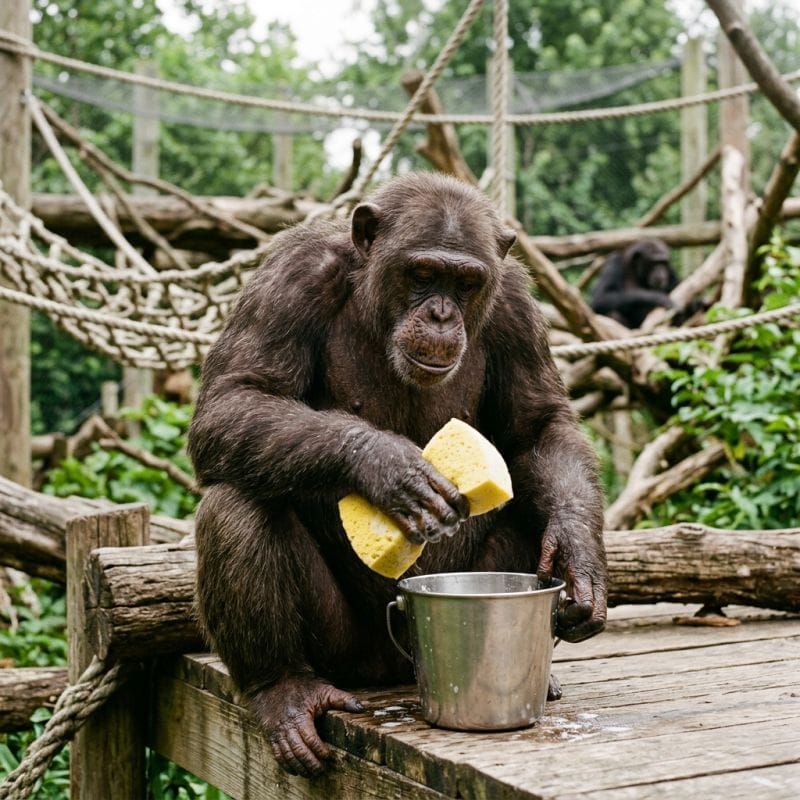
Researchers have observed what could be the first clear evidence of wild chimpanzees developing a new culture. While filming the animals at a field station in Uganda, the team noticed some of the chimps making a new type of leaf sponge, a tool they use for drinking. The new behaviour soon spread throughout the group.
Traditionally, the chimps folded leaves into little scoops, dipped them into ponds and sucked the water out. Then the researchers saw a dominant male making his sponge from moss instead of leaves. Soon afterwards, another chimp picked up a discarded sponge and began using it too. It might sound trivial, but until then the chimps had never used moss.
As the researchers watched and filmed, they saw the behaviour pass from individual to individual, a clear example of social learning.
This is interesting for two reasons. First, it shows one individual thinking creatively and inventing something new. That is clearly a rare event, but it does happen in wild chimp populations. More interesting still is how quickly the innovation spread through the group by learning and copying. This is the mechanism by which culture evolves.
This ability in apes to think creatively (the rare bit) and then pass the idea on to others (the easy bit) is the basic mechanism of ape behaviour, and it seems to have evolved in humans in a far more advanced form. I would argue the same model applies to us: the occasional, difficult part is the creative innovation; the easier part is the spread of culture.
Now, where's that sponge?